Featured Author and Illustrator: Arnold Lobel

Let's take a look this month at the work of Arnold Lobel and let's start with his accomplishments in his books for early and emergent readers, the "I Can Read" series.
Although the books stand well on their own, to fully appreciate Lobel's contribution, we should look back at the time when his first early reader: Frog and Toad Are Friends was published in 1970. Better yet, let's look back even further to the 1950s when early readers really did consist of simplistic, humorless and contrived stories with sentences like, "Look, Jane, look! See Spot run." That's because of something called The Dolch List that became a sort of bible for publishers of reading textbooks for children. This list was constructed during World War II and consisted of the most frequently used words in early readers of the time. It was compiled to make it easier for young children to transfer to other schools in that transient society. Note that this was not a list of the most frequently used words in the English language or the words that were shown to be the easiest to read. It really didn't make much sense. Most of us working with emergent readers had to work hard to motivate the reading of such pap, but it was just the way it was.
Dr. Seuss changed all that with The Cat in the Hat and the line of "Beginner Books" he and Bennett Cerf established. Seuss stuck to the prescribed Dolch list of words but, with his fertile imagination and penchant for doggerel, he made those words twist and bounce along into funny and interesting stories that delighted readers new and old, even with that very limited vocabulary.
(Continued Below)
Advertisement:
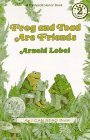
Then along came Arnold Lobel. He'd been writing and illustrating books for children since 1962 but in 1970, the editors at what was then Harper Row convinced him to try an early reader and Frog and Toad Are Friends burst onto the scene. Knowing and caring nothing about the Dolch list, Lobel used what he and his editors thought would make a book easy to read Ñ short sentences and frequently repeated words to produce a book of short chapters about a loving friendship. The book was funny and tender and won immediate acclaim, being named as a Caldecott Honor book, among its many honors.
Frog and Toad was just the beginning of a long list of early readers written and illustrated by this talented man. Like the prototype, they are made up of short chapters and contain lovable though often slightly wacky characters.
I interviewed Arnold Lobel once and asked him why so many of the characters in these books are neurotic. He said that they didn't start out that way but, if you talk in short, choppy sentences and repeat words a lot, you begin to sound neurotic quickly.
Reading isn't the only area of the curriculum that Lobel's "I Can Read" books strengthen. Math and Science activities fairly leap from the pages of these engaging stories. Although he knew that his books were being used to teach and further classroom skills and was interested to hear how they were being used, Lobel kept his focus on the characters and the format and left their pedagogical import to others. It's what makes these books stand above the crowd of early reading material for children.
(Continued Below)
Advertisement:
Now for a closer look at a few of the many wonderful books by Arnold Lobel. First the early readers:
- Days with Frog and Toad HarperCollins, 1979 ISBN 0060239638. Order Info
- Frog and Toad Are Friends HarperCollins, 1970 ISBN 1559942290. Order Info
- Frog and Toad Together HarperCollins, 1972 ISBN 006023959X. Order Info
- Frog and Toad All Year HarperCollins, 1976 ISBN 0060239506. Order Info
The books about Frog and Toad all revolve around the humor in a friendship between two very different characters. Toad is neurotic, often fearful and very excitable. Frog is the sane one, dealing with his friend's foibles with a gentle understanding and appreciation.
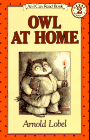
Owl at Home HarperCollins, 1987 ISBN 0060239492. Order Info
Although Lobel admitted that many of his characters were neurotic, he said that Owl was more than that - he was downright psychotic. Owl is the guy who lets the wind in to destroy his house in the middle of winter, who is convinced that two strange bumps are taking over his bed and who creates tear-water tea by thinking sad thoughts.
Grasshopper on the Road HarperCollins, 1987 ISBN 006023962x. Order Info
Grasshopper may well be the only sane one in this book as he comes upon characters with strange life styles as he walks down the road.
Mouse Tales HarperCollins, 1978 ISBN 0064440133.Order Info
Seven little mice wake up in the night and demand a story. Their father obliges with a different tale for each mouse.
Mouse Soup HarperCollins, 1977 ISBN 0060239670. Order Info
Weasel has turned up unexpectedly and, unfortunately for Mouse, Weasel is hungry and announces his intention of eating Mouse Soup. Mouse has his wits about him, however, and he's a good storyteller.
Uncle Elephant HarperCollins, 1987 ISBN 0060239808. Order Info
This gentle friendship is between generations of the same family as an elderly elephant and his nephew enjoy their time together. Written at a time when Lobel's own beloved grandmother was confined to a nursing home and unaware of her surroundings, Lobel created this story of old age the way he thought it ought to be.
OTHER BOOKS BY ARNOLD LOBEL

Fables HarperCollins, 1980 ISBN 0060239735. Order Info
Asked to create a new edition of Aesop's Fables, Arnold Lobel tried and failed to do so. He disliked the moralistic tone in them and so returned the advance. However, the fable format was firmly affixed in his head and so he created these one page tongue-in-cheek fables. The book won the Caldecott Award.
Ming Lo Moves the Mountain Mulberry, 1993 ISBN 0688109950. Order Info
Lobel uses the old formula of wise man and fool for this folktale like story wherein the fool demands to know how to move a mountain. The wise man has solutions that involve dismantling his house and performing the mountain-moving dance.
The Rose in My Garden Mulberry Books, 1993 ISBN 0688122655. Order Info
Arnold Lobel and his wife, Anita, seldom collaborated on a book, but this time they did. Using the format of an alphabet book, Arnold's words and Anita's pictures combine to tell a story of action and surprise in a lovely garden.
(Continued Below)
Advertisement:

Related Areas of Carol Hurst's Children's Literature Site
- Emergent Readers. Article on more books for beginning readers
- Owl at Home by Arnold Lobel. Book Review.
- Author Studies in the classroom. General books and activities for any author.
-
Art, Crafts and Artists in Books for Kids and Teens, Featured Subject article with discussion and activity ideas, and picture books, nonfiction and novels for the classroom:
http://www.carolhurst.com/subjects/art.html

