Winter and Children's Literature
There's no use fighting it. Winter comes every year to the temperate and arctic zones bringing with it lots of teachable moments. The subject presents us with close ties between science and literature with social studies, math, physical education, music and art nearby making it perfect for a cross-curriculum theme. In this article we share teaching ideas, picture books, novels, poetry and nonfiction books.
In literature and language arts we can gather as many of the books below as possible to immerse ourselves in the topic. We can write journal weather observations and note ways in which the weather effects our days. Winter is also an introspective season and perfect for writing poetry. (See Frederick listed later in this article and the poetry books listed.)
For science there are easy lead-ins to investigating what causes the seasonal cycles on earth. We can also jump from winter, with it s trademark snowflakes, to the study of water and crystals (see Walter Wick's A Drop of Water and Jacqueline Briggs Martin's Snowflake Bentley later in this article).
For social studies we can investigate how the seasons differ in various parts of the world including how the weather in these areas affects the people living there. For those living in areas without cold winters this is a perfect excuse for starting up a correspondence with another school to learn about each other's seasons.
For math we can set up our own weather measuring equipment and calculate averages, means and other statistical analysis. We can also calculate the differences between local conditions and the conditions in the places studied in social studies. For younger students we can focus on the patterns in the seasonal cycle.
(Continued Below)
Advertisement:
For physical education we can explore winter sports and how the weather affected which sports are considered "winter." We can also integrate such activities as winter hiking with some of the science studies. Discussing health and physical fitness with an eye to the challenges of staying fit during the winter can bring a visit from a physical education teacher or cardiac rehabilitation specialist.
For music we can incorporate numerous winter related songs, write musical pieces or provide selected music to a video or slide presentation of the season.
Artwork can reflect the season and also be used in the science study of crystals and water states including snowflake formation. Winter is also traditionally a time for working on crafts including the early subsistence crafts such as spinning and weaving. Try doing some on your own and then visit a local weaver to see a larger loom at work. (See also Our Featured Subject Classroom Unit on Quilting.)
Looking through the vast array of books on the subject, some opportunities for classification leap into focus. Some of the literature, particularly the picture books for younger children, treats winter as a time of fun and pleasant activities. Others, particularly the survival stories and those that deal with getting ready for winter and those that talk about the special clothing we wear, treat winter as a challenge -- sometimes even as a threat to life. Much, but certainly not all poetry deals with the beauty of winter. In some books, particularly the folktales, winter is equated with darkness and death. A chart presenting some of those classifications and others might be a way to start recording the reading as the theme progresses. Classifying books in that way also gives us an excuse, in upper elementary and middle school classrooms, to deal with picture books for younger children.
Winter doesn't always mean ice and snow or even cold, of course, and a large map may be the best way to focus on the more subtle signs of winter in various climates around the world.
 Grades PreK - 2
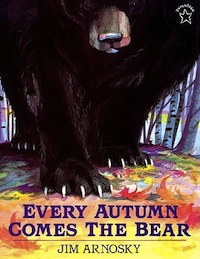
Every Autumn Comes the Bear by Jim Arnosky. Picture Book. 32 pages.
Find this book: Local Bookstore, Amazon
This illustrations in this book are superb and the text is very simple. Just before winter, a bear appears on a Vermont farm in search of a place to sleep during the cold months ahead. Eventually, it discovers a natural den among some hilltop boulders. This is a realistic depiction of a bear and the woodland environment.
Activity: Contrast the colors used to illustrate this book with those the artist might have used to show the same scenes after the arrival of winter. Use those colors to paint your own winter in Vermont landscape.
Grades PreK - 2
The Mitten by Jan Brett. Picture Book. 32 pages.
Find this book: Local Bookstore, Amazon
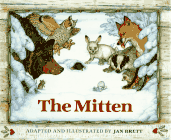
Jan Brett has put her own spin on the familiar folk theme of a shelter that stretches to accommodate each new occupant. Here, based on a Ukrainian tale, it's a boy, Nicki, who begs his grandmother, Baba, to knit him a pair of white mittens. A mole discovers the mitten lying on the snow and crawls inside, followed by a snowshoe rabbit, a hedgehog, an owl, a badger, a fox, a bear, and finally a mouse. Read More in our Featured Book Teachers Guide with discussion questions, extension activities, related books and links.
Activity: This story takes place in a northern climate. Change the venue to your area. What animals might find shelter in a lost mitten?
(Continued Below)
Advertisement:
Grades PreK - 1
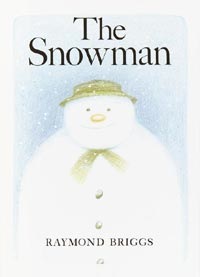
Snowman by Raymond Briggs. Picture Book. 32 pages.
Find this book: Local Bookstore, Amazon
A snowman comes indoors and his boy-creator shows him the wonders of a modern home. After showing amazement and fascination, the snowman takes the boy to see the wonders of the snow world. This book uses a comic strip format.
Activity: Make a sound track for this story.
 Grades PreK - 5
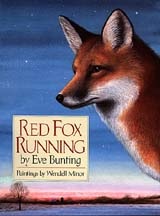
Red Fox Running by Eve Bunting. Illustrated by Wendell Minor. Picture Book. 32 pages.
Find this book: Local Bookstore, Amazon
This book, beautifully illustrated by Wendell Minor, follows the experiences of a red fox as it searches across a winter landscape for food. The rhyming text suits the mood of the illustrations depicting the rural milieu of the fox.
Activity: Find out what animals would be possible food for the fox. Select one of them and write the story with that animal as the hunter of even smaller food in a winter landscape
Grades PreK - 4
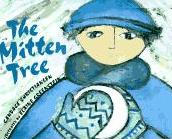
The Mitten Tree by Candace Christiansen. Illustrated by Elaine Greenstein. Picture Book. 32 pages.
Find this book: Local Bookstore, Amazon
Sarah, an old lady, lives by herself. She misses her grown children and so, she watches the children who wait for the school bus near the big evergreen tree nearby. Although Sarah smiles at them as she walks by, they ignore her. When she notices a little boy, dressed in blue, who can't enjoy the snow play because he has no mittens, she finds some blue yarn and knits a pair of mittens which she hangs on the tree at the bus stop. Nobody sees her do it but the little boy in blue arrives first at the bus stop that morning, and seems to know the mittens are for him. Read More.
Activity: Collect warm clothing and donate it to a service that clothes homeless people.
Grades PreK - 1
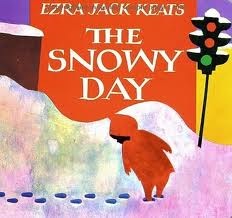
The Snowy Day by Ezra Jack Keats. Picture Book. 40 pages.
Find this book: Local Bookstore, Amazon
In this Caldecott Medal winner, a little African-American boy experiences the snow in the city spending the day outside playing. He slides down a snow bank in his red snow suit, makes tracks through the snow, makes snow angels, and knocks snow from a tree onto his head. Afraid the snow won't last, Peter tries to keep a snowball in his pocket until the next day. Read More in our Featured Book Teachers Guide with discussion questions, extension activities, related books and links.
Activity: Make your own book of a day in the winter using the illustrations in this book as inspiration.
(Continued Below)
Advertisement:
Grades PreK - 2
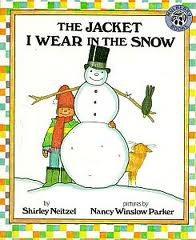
The Jacket I Wear in the Snow by Shirley Neitzel. Illustrated by Nancy Winslow Parker. Picture Book. 32 pages.
Find this book: Local Bookstore, Amazon
The “House that Jack Built” format has been used and over-used, but just when you think there’s nothing else they can do with it, something like The Jacket I Wear in the Snow comes along. Shirley Neitzel and Nancy Winslow Parker have used the simple format and combined it with a rebus puzzle to delight the very young for whom getting dressed and undressed for the snow is a Herculean task. It’s one of the best of the predictable books. Read More.
Activity: Conduct a winter clothing collection and make sure the clothing gets to people who need it.
Grades 1 - 4
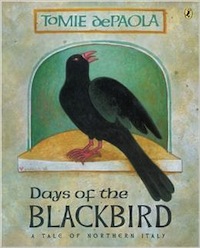
Days of the Blackbird:: A Tale of Northern Italy by Tomie dePaola. Picture Book. 32 pages.
Find this book: Local Bookstore, Amazon
A lovely white bird with a beautiful song stays for the winter to sing for a kind man who has fallen ill. To stay warm, it sits in the chimney and turns black during the three coldest days of the year. dePaola explains his inspiration for the story in an afterward and even plugs a New Hampshire restaurant. There's a strong corollary here with Van Laan's Rainbow Crow.
Activity: Find and read The Rainbow Crow by Nancy Van Laan, another tale about why a crow's feathers are black and then make a list of other ways this might have happened.
Grades PreK - 2
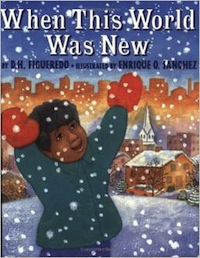
When This World Was New by D. H. Figueredo. Illustrated by Sanchez, Enrique O.. Picture Book. 32 pages.
Find this book: Local Bookstore, Amazon
Danielito, our narrator, and his family have just moved to New York City from their home on a warm Caribbean island. There's much to get used to but fortunately the boy's uncle has been living in this country for some time. He makes the adjustment easier. He has found them a place to live and a job for the father. Everything frightening becomes wonderful the next morning as Danielito's father wakens him in the still-dark morning to venture out into the first snow. Also available in Spanish.
Activity: What would you tell someone who never experienced snow about what it's like? Or, if you've never experienced snow tell someone something about a phenomenon common in your climate.
Grades PreK - 2
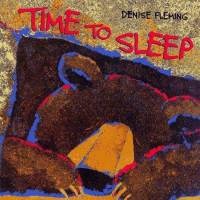
Time to Sleep by Denise Fleming. Picture Book. 32 pages.
Find this book: Local Bookstore, Amazon
In this dreamy circle pattern story, Bear smells winter in the air and will sleep as soon as she tells Snail. Snail remembers frost on the grass and so will sleep as soon as he tells Skunk. And so it goes until Ladybug goes to tell Bear who is already snoring in her cave.
The pattern in this book is that of a circle. A bear smells the coming of winter and passes on the knowledge. We watch it go from animal to animal until it comes back to the bear.
Activity: Compose and illustrate another circle story about winter.
Grades 2 - 4
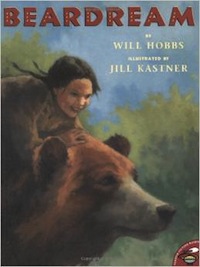
Beardream by Will Hobbs. Illustrated by Kastner, Jill. Picture Book. 32 pages.
Find this book: Local Bookstore, Amazon
This is the story of the origin of the Bear Dance as performed by the Utes of Colorado. According to the legend, one year the great bear did not wake up from the winter's sleep. The people, missing his accustomed presence in the woods, send Short Tail to wake the great bear. When he does the bear rewards him by taking him to the stately dance where bears celebrate the arrival of spring. The boy takes the experience back to his people where they now repeat the bear dance each year. The illustrations are quite lovely with many bear shapes in the terrain.
Activity: Many Native American people value and used the bear. Find out about other animals that were and are revered in native cultures.
Grades K - 2
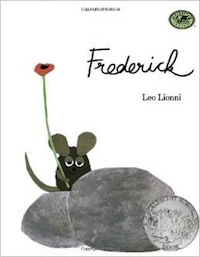
Frederick by Leo Lionni. Picture Book. 32 pages.
Find this book: Local Bookstore, Amazon
The mice that live in the stone wall are busy gathering and storing food for the long winter ahead. Frederick, however, is using his time to gather sun rays, colors, and words. The other mice don't appreciate Frederick's "work" until their supplies have run out and Frederick shares his wonderful collection.
Activity: Discuss whether you would prefer food or art.
Grades PreK - 2
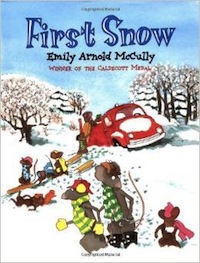
First Snow by Emily Arnold McCully. Picture Book. 32 pages.
Find this book: Local Bookstore, Amazon
This is just one of a series of delightful wordless books about a mouse family. It's a snowy day and they shovel out quickly and then pile into the truck. With grandma and grandpa leading the way, they head for the slopes to go sliding. One little mouse obviously has "cold feet" as she perches at the top of a steep hill while her brothers and sisters discover the thrill of it all.
Activity: Make a series of visuals based on this book and present them with a sound track.
Grades PreK - 4
Snow by Uri Shulevitz. Picture Book. 32 pages.
Find this book: Local Bookstore, Amazon
There are few words in the entire book, it's the illustrations carry the story. Villagers go about their business. The text points us to a tiny dot we might otherwise have missed%mdash;one snowflake. A boy and his dog don't miss it and they react joyfully even though the grandfather downplays it. After all, it's only one snowflake. More and more snowflakes appear in the sky and the boy and dog maintain that it is indeed snowing. Townspeople, the radio and even the television proclaim that it is not, but the flakes keep coming. Read More.
Activity: Act out this story, giving dialogue to the grownups as well as the children in the story.
Grades K - 4
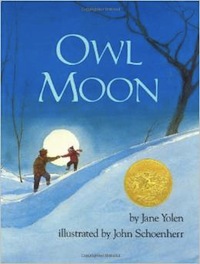
Owl Moon by Jane Yolen. Illustrated by Schoenherr, John. Picture Book. 32 pages.
Find this book: Local Bookstore, Amazon
A father and child go for a late night walk into the woods to find an owl. The child has obviously been waiting for a long time to be considered old enough to go. The older siblings have warned that no complaining is allowed, you have to make your own warmth and no noise is permitted. You may or may not, they have said, be successful in your search.
Activity: Write about a thing you waited a long time to be old enough to do. Try to write about your feelings as well as your experiences.
Grades 5 - 9
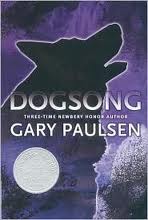
Dogsong by Gary Paulsen. Short Novel. 192 pages.
Find this book: Local Bookstore, Amazon
Russel Susskit, a 14 year old Eskimo boy, feels assailed by the modernity of his life. He takes a 1400 mile journey, alone, by dogsled, across ice, tundra, and mountains seeking his own "song" of himself --an identity in harmony with the old traditions "taught" to him by Oogruk.
Activity: Find out how dog sleds work, how they're made and the functions of the various parts.
Grades 5 - 9
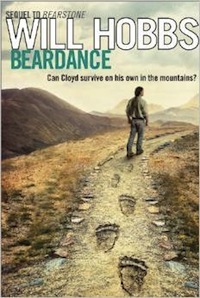
Beardance by Will Hobbs. Novel. 208 pages.
Find this book: Local Bookstore, Amazon
In this sequel to Bearstone, Cloyd is still full of guilt for his part in the death of what might have been the last surviving male grizzly in Colorado. With the help of a naturalist, Ursa, Cloyd finds a surviving female and three cubs only to watch helplessly when the mother and one cub are killed in an avalanche. Determined to save the surviving cubs, Cloyd stays through the winter with them, becoming very bear-like himself.
Activity: Research the population and chances for eventual survival of grizzlies around the world. Find out what is being done to help them and find a role you can play in that work.
Grades 3 - 6
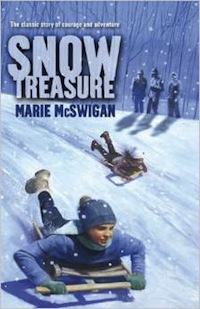
Snow Treasure by Marie McSwigan. Novel. 208 pages.
Find this book: Local Bookstore, Amazon
In Norway during World War II, a group of children manage to smuggle $9,000,000 past the Nazis in this exciting novel based on an actual incident.
Activity: Find other books where the Nazi's were fooled by smuggling operations, mostly people smuggling.
Grades 1 - 4
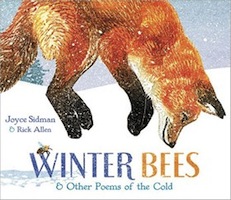
Winter Bees & Other Poems of the Cold by Joyce Sidman. Illustrated by Rick Allen. Poetry. 32 pages.
Find this book: Local Bookstore, Amazon
Poetry, factual text and extraordinary illustrations fill this book about how some animals have adapted to winter. Swans, snakes, beavers, moose and more fill the cold setting with life and warmth. The poems are wonderful and varied. Each poem is accompanied, on the facing page, with facts about the poem's subject. On both pages of each spread are the remarkable illustrations done, in part, with hand inked linoleum blocks. This poet/illustrator team has, once again, created a treasure. Read More.
Activity: List the ways in which humans survive winter.
Grades PreK - 3
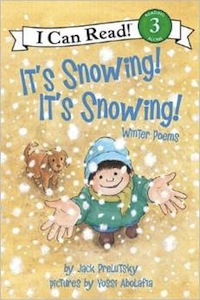
It's Snowing! It's Snowing! by Jack Prelutsky. Illustrated by Titherington, Jedan. Poetry. 48 pages.
Find this book: Local Bookstore, Amazon
From putting on layers and layers of clothing to throwing snowballs, Prelutsky captures the moods and sights of winter in exuberant poems.
Activity: Classify these poems and find poems in other anthologies to fill out the categories.

Grades 2 - 9
Snowflake Bentley by Jacqueline Briggs Martin. Illustrated by Mary Azarian. Picture Book, Nonfiction. 32 pages.
Find this book: Local Bookstore, Amazon
Wilson Bentley was fascinated by snowflakes. Born in Vermont in 1865, his parents supported his interest, spending their savings to buy him a camera and microscope. His thousands of photographs are still used in studies today. Martin tells the tale simply with sidebars adding further information about the science behind Bentley's studies. Read More in our Featured Book Teachers Guide with discussion questions, extension activities, related books and links.
Mary Azarian used woodcuts to illustrate this picture book biography about a man whose passion was to photograph snowflakes.
Grades 3 - 9
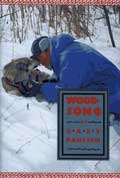
Woodsong by Gary Paulsen. Novel. 144 pages.
Find this book: Local Bookstore, Amazon
These are autobiographical sketches of Paulsen's experiences in the north woods. There is acceptance and respect for animal life, especially sled dogs, in all its harsh reality. A good portion of the book relates the author's experiences in running the Iditarod. These are good adventure and outdoor stories which should appeal to outdoor enthusiasts and to animal lovers. Read More.
Find out about dog sleds. How are they made? What is the purpose of each of the various parts?
Grades 3 - 9
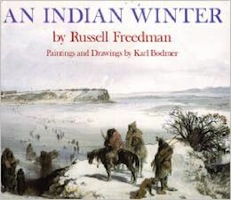
Indian Winter, An by Russell Freedman. Illustrated by Bodmer, Karl. Nonfiction. 88 pages.
Find this book: Local Bookstore, Amazon
The text and illustrations in this book are largely from a study that was made in 1833 by the German Prince Maximilian of Wied and the artist Karl Bodmer. Spending the winter with the Mandan Indians in what is now North Dakota, Maximilian took copious notes in his journals and later produced a book on the subject, which this book is based on.
Activity: Find out about the lifestyle of American Indians in North Dakota today.
Grades 4 - 9
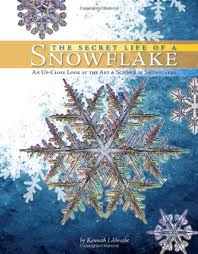
The Secret Life of a Snowflake: An Up-Close Look at the Art and Science of Snowflakes by Kenneth Libbrecht. Nonfiction Picture Book. 48 pages.
Find this book: Local Bookstore, Amazon
Using a microscope Libbrecht, a physicist, takes photos of snowflakes. The photos are simply stunning. No unit on snow or winter is complete without this or one of his books for adults. This is a wonderful science and photography book. Use it with other books about scientists because we get a glimpse of Libbrecht's work through this book. This also belongs in any unit on crystal formation or weather. Instructions on how to cut a scientifically correct snowflake out of paper are included. Read More.
Using a microscope Libbrecht, a physicist, takes photos of snowflakes. The photos are simply stunning. No unit on snow or winter is complete without this or one of his books for adults.
Grades PreK - 8
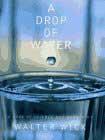
A Drop of Water: A Book of Science and Wonder by Walter Wick. Nonfiction. 40 pages.
Find this book: Local Bookstore, Amazon
Wonderful black and white photographs show the properties of water. One series shows a drop of water coming from a faucet bulbous and elongated, then almost perfect round and attached to a string of water and lastly leaving the string behind and falling free in a perfect sphere. We watch a snowflake morph into water vapor gradually losing definition. This is a fascinating book for any age.
This remarkable book uses photography to explain the properties of water. The section on snowflakes is the applicable part for this theme.

Related Areas of Carol Hurst's Children's Literature Site
- Weather in Children's Books. Featured Subject with books, activities and links.
- Quilts and Children's Literature. Featured Theme with books, activities and links.
- Poetry Books I'd Want in My Classroom. Featured Subject.
- The Mitten by Jan Brett. Featured Book with Activities.
- Snowflake Bentley by Jacqueline Briggs Martin. Featured Book with Activities.

